NHS machinery
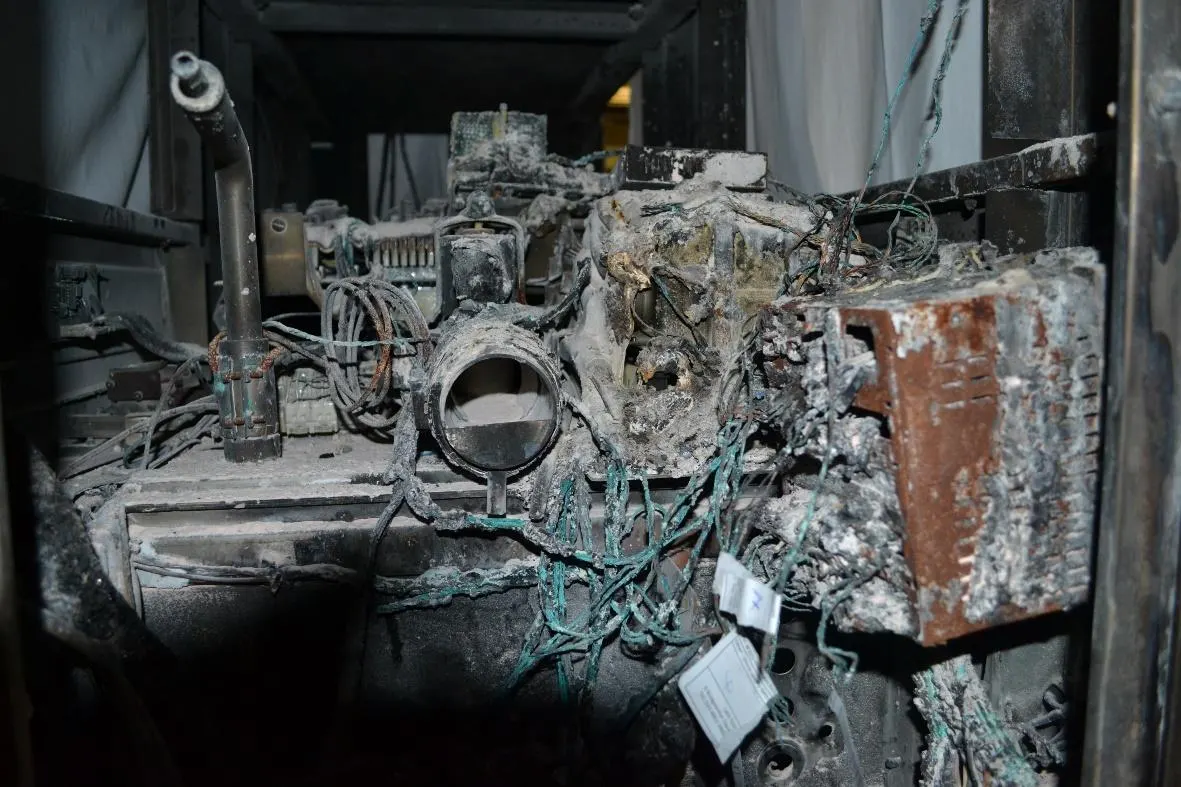
Sterilisers, washer-disinfectors and clinical equipment run hot all day. Motors and solenoids are common ignition points, and a fire stops patient care.
In-cabinetCylindrical FP Generators
UK fire & rescue call-outs · 2025
And batteries aren’t the only machines burning.
NHS machinery. Diesel generators. Laundry. Vending machines. Li-ion battery storage and charging. Production machinery. A fault inside one unattended machine can take down a whole site, and the consequences are catastrophic.
Source: QBE Freedom of Information data from 42 of 49 UK fire & rescue services, published May 2026 (FPA, Circular Online). Background: inside an NHS sterilisation machine after an unprotected fire (FirePro case study, NDA).
Fires reported · UK
Battery fires are climbing fast, and thousands more workplace fires start in machinery, wiring and equipment every year. These are confirmed fire and rescue figures.
lithium-ion battery fires attended by fire and rescue services.
rise in battery fires in three years. 23% were in commercial premises.
battery fires a day. One every five hours.
fires in non-residential buildings.
fires in industrial premises, the largest single sector.
fires in hospitals and medical care premises.
Sources: QBE FOI data, May 2026 (Circular Online) · Home Office FIRE0301/FIRE0602 data as analysed by SBS (International Fire & Safety Journal, Dec 2025).
Where fires start
Each one packs heat, motors and wiring into a closed cabinet. A fire can grow out of sight behind the panels until it breaks out, and by then portable extinguishers are too late.
Sterilisers, washer-disinfectors and clinical equipment run hot all day. Motors and solenoids are common ignition points, and a fire stops patient care.
Standby power for hospitals, stadiums and data centres. Fuel, hot exhausts and switchgear share one room, and the generator has to work when everything else fails.
Industrial washers and dryers combine heat, lint and big motors, often running overnight with nobody in the room.
Compressors, lighting and wiring switched on 24/7 in receptions, corridors and escape routes. Unattended by design.
Forklift charging, power tool cabinets and battery rooms. Thermal runaway makes its own heat and toxic gas, and cells can re-ignite.
Process control cabinets, CNC and mining machinery. One fire stops the line, and lost output costs more than the repair.
Applications from FirePro UK’s in-cabinet and room flood portfolio. Generator choice depends on enclosure volume and risk; we design each system to suit.
Catastrophic consequences
The bill arrives after the flames are out: business disruption, lost revenue, smoke and water damage, and environmental pollution.
NHS sterilisation machineWith FirePro fitted: a second fire seven months later was put out inside the machine, and service resumed within two days.
FirePro UK case study (NDA)
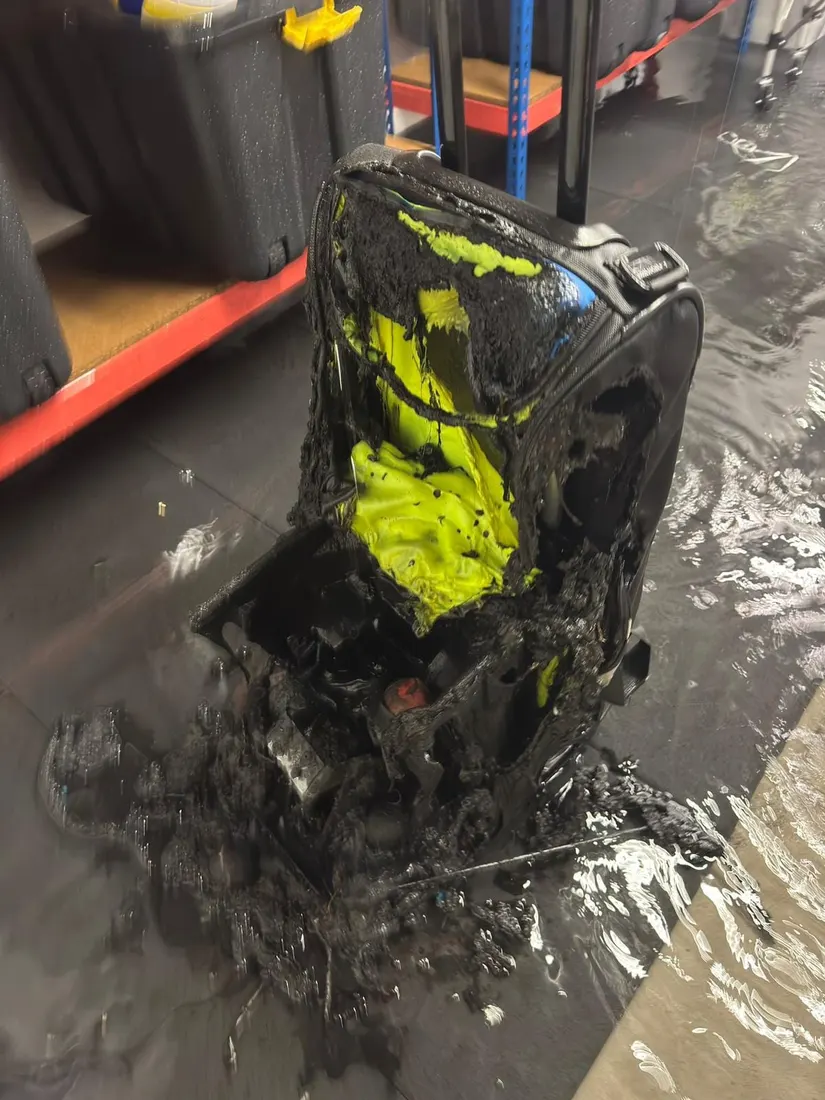 Lithium-ion · on charge
The machine risk: the fire cost 150 times more than the equipment it started in.
FirePro UK case study (NDA)
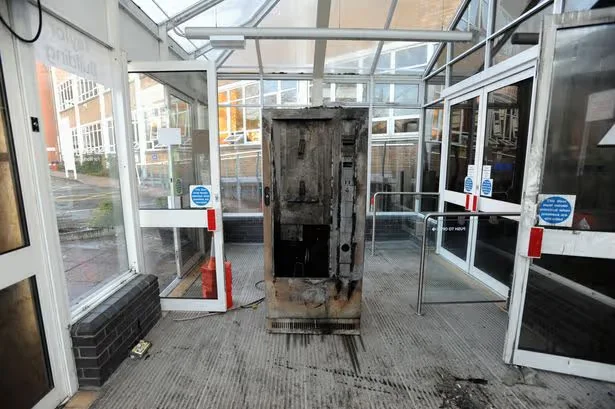 Electrical fault · unattended
The machine risk: nobody watches a vending machine. A fire behind its panels has time to grow.
FirePro UK case study (NDA)
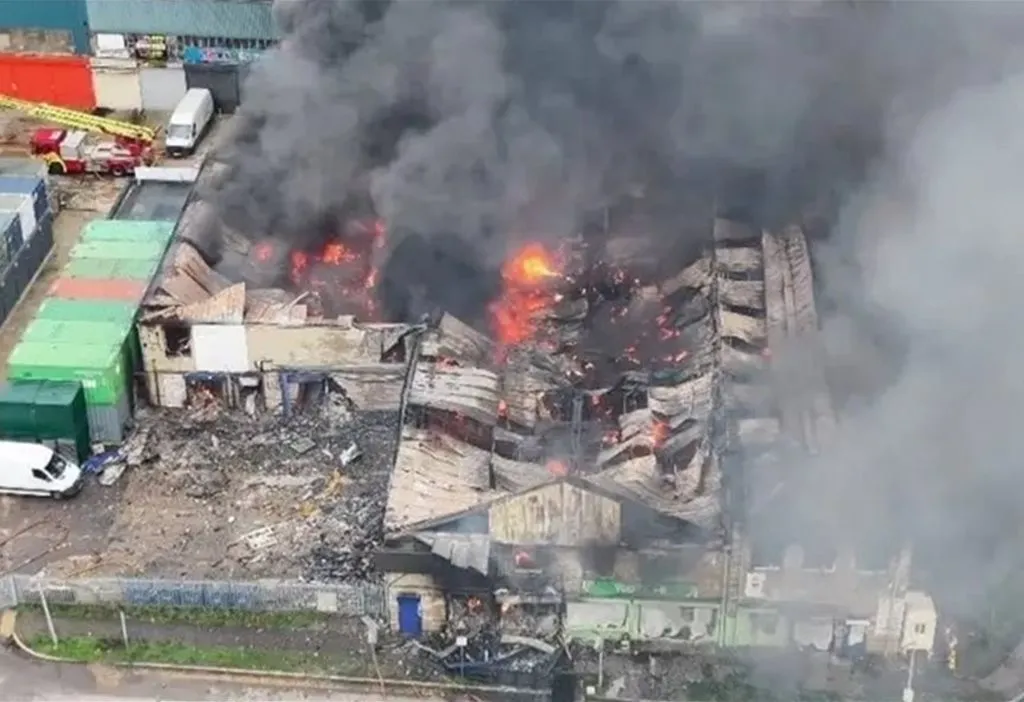 Toxic smoke
The machine risk: smoke contaminates the building, your stock and the area around it long after the flames are out.
Plugged in.Charging.Destroyed.
Tennis equipment was destroyed after its lithium-ion battery ignited while on charge, resulting in over £180,000 in damage and repair costs. Replacing the machine itself cost £1,200.
Once thermal runaway starts, a lithium-ion cell produces its own heat and toxic gas, and portable extinguishers do little to stop it.
One fault.One machine.£265,000.
It stood in the entrance of a university hospital campus, lit up and humming, with nobody watching. Then an electrical fault developed deep inside the cabinet. The fire took hold behind the panels, gutted the machine to a blackened shell and filled the entrance with smoke. A single vending machine. An estimated £265,000 of damage.
Incidents like this show how quickly a fault inside a compact, unattended enclosure can escalate, and why protection has to act automatically, at the source, before anyone even knows there’s a problem.
This is avoidable
FirePro is LPCB certificated condensed aerosol fire suppression. A generator sits inside the cabinet or room. When detection senses fire it releases a fine potassium-based aerosol that puts the fire out in seconds. No pipes, no pressurised cylinders, no water.
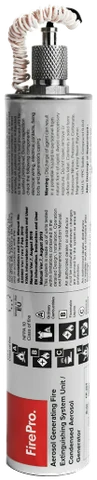
20 g of agent for very small and compact enclosures.
fireprouk.com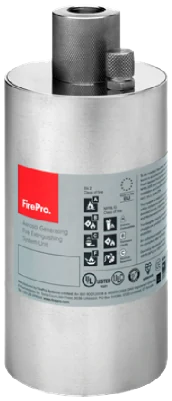
200 g of agent for small to medium enclosures.
fireprouk.com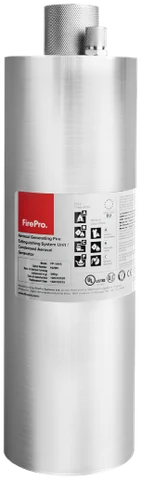
500 g of agent for larger cabinets.
fireprouk.com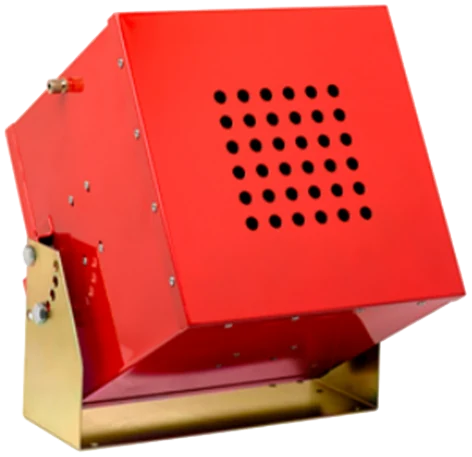
4,200 g of agent for medium to large enclosures.
fireprouk.com5,700 g of agent for large enclosures.
fireprouk.comA selection from the range. FirePro makes more generator sizes than the five shown here, which are picked to show the range of volumes FirePro can protect. FirePro agent density is calculated on a gross volumetric calculation and the class of fire, so every system is designed to suit the enclosure. See the full range on fireprouk.com
Watches thermocable or smoke detection and fires up to four generators. Signalling for the fire alarm and other devices.
fireprouk.com → Stand-aloneThermal activation module with a bimetallic sensor for box-type generators. Detects and suppresses with no panel or controller.
fireprouk.com → DetectionLinear heat detection cable routed through the machine, so it senses heat at the source, wherever it starts.
See the full system →Proven in the field
An NHS sterile services unit lost a machine and flooded a floor in its first fire. FirePro designed in-cabinet suppression. Seven months later a second fire broke out, and the system put it out inside the machine. When the fire service arrived 12 minutes later there was nothing left to fight.
Fire 1 · before FirePro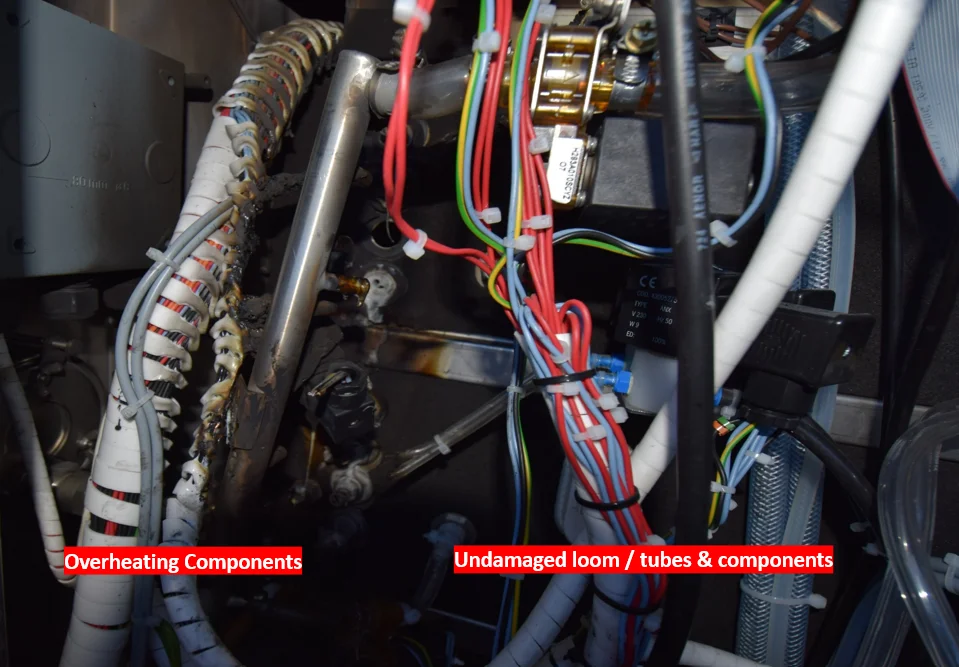 Fire 2 · FirePro fitted
Machinery & battery fire newsdesk